Distribuzioni di probabilità e test di ipotesi
R2026aUna distribuzione di probabilità è una distribuzione teorica basata su ipotesi relative a una popolazione sorgente. La distribuzione descrive le probabilità dei possibili esiti di un evento casuale. Un test di ipotesi consente di determinare se i dati di campionamento provengono da una popolazione con caratteristiche specifiche, come ad esempio una determinata distribuzione. Statistics and Machine Learning Toolbox™ fornisce feature e strumenti per lavorare con le distribuzioni di probabilità ed eseguire test di ipotesi, comprese funzioni che consentono di:
Adattare le distribuzioni di probabilità ai dati di campionamento.
Valutare le funzioni di probabilità, quali pdf e cdf.
Calcolare le statistiche di riepilogo, quali la media e la mediana.
Visualizzare i dati di campionamento.
Generare numeri casuali.
Eseguire la verifica delle ipotesi tramite test di distribuzione, test di posizione e test di dispersione.
Per ulteriori informazioni, vedere Working with Probability Distributions e Available Hypothesis Tests.
Nozioni di base sulle distribuzioni di probabilità e sui test di ipotesi

Categorie
- Distribuzioni discrete univariate
Calcolare, adattare e generare campioni da distribuzioni a valore intero
- Distribuzioni continue univariate
Calcolare, adattare e generare campioni da distribuzioni a valori reali
- Distribuzioni multivariate
Calcolare, adattare e generare campioni da distribuzioni a valori vettoriali
- Esplorazione e visualizzazione
Tracciare funzioni di distribuzione, adattare distribuzioni in modo interattivo, creare grafici e generare numeri casuali
- Generazione di numeri pseudo-casuali e quasi casuali
Generare dati di campionamento pseudo-casuali e quasi casuali
- Tecniche di ricampionamento
Ricampionare i dati utilizzando i metodi bootstrap, jackknife e di validazione incrociata
- Test di ipotesi
Test t, test F, test della bontà di adattamento del chi quadrato e altro ancora
Esempi in primo piano
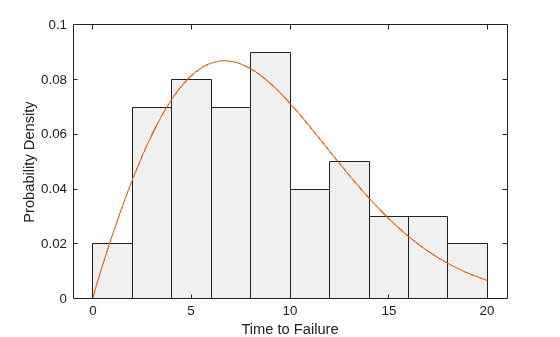
Curve Fitting and Distribution Fitting
Perform curve fitting and distribution fitting, and learn when each method is appropriate.
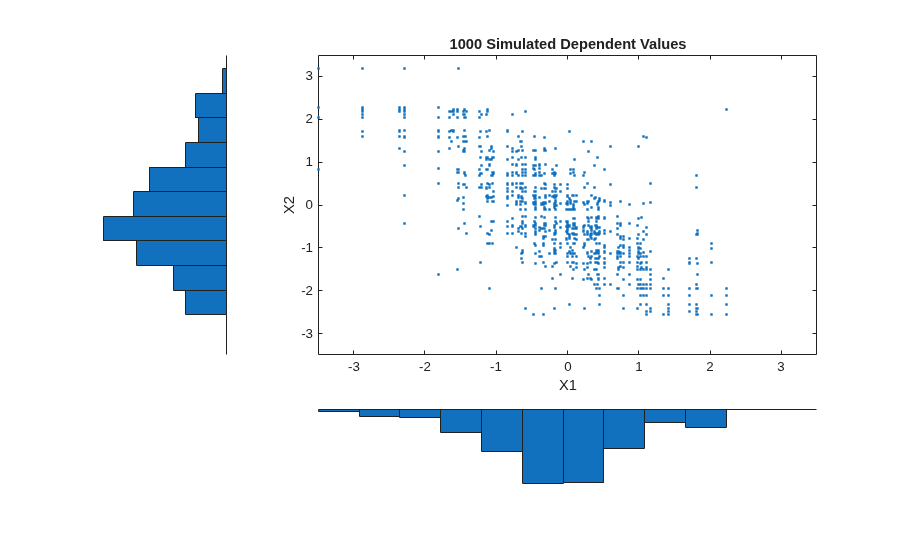
Simulate Dependent Random Variables Using Copulas
Use copulas to generate data from multivariate distributions with complicated relationships among the variables, or with the individual variables from different distributions.
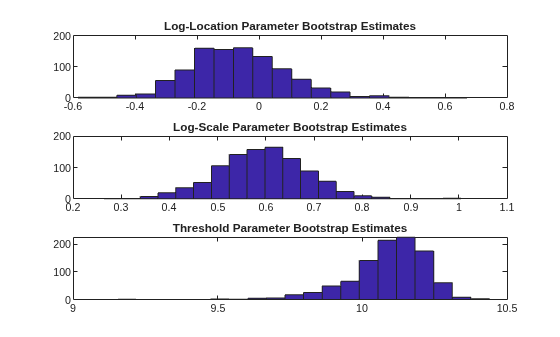
Fitting a Univariate Distribution Using Cumulative Probabilities
Fit univariate distributions using least-squares estimates of the cumulative distribution functions. This is a generally applicable method that can be useful in cases when maximum likelihood fails, for instance some models that include a threshold parameter.
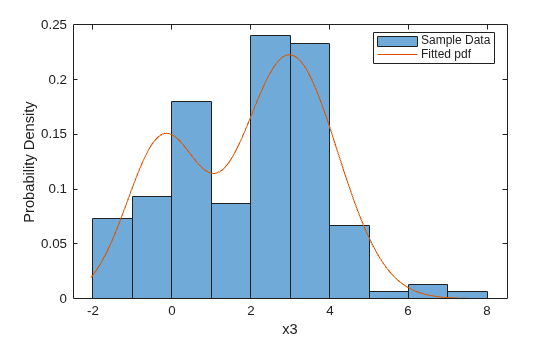
Fit Custom Distributions
Fit a custom distribution to univariate data by using the mle function.
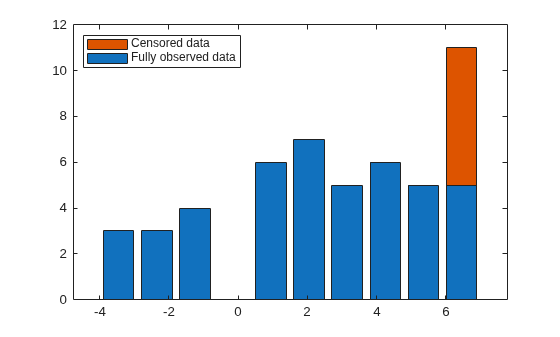
Avoid Numerical Issues When Fitting Custom Distributions
Use advanced techniques with the mle function to avoid numerical issues when fitting a custom distribution. Specifically, you learn how to:
Risorse didattiche

Statistica descrittiva e distribuzioni di probabilità
Imparare i concetti della statistica descrittiva e delle distribuzioni discrete e continue.

