Vector convergence in cartesian coordinates
Mostra commenti meno recenti
Hey everyone,
How can I help my vector in cartesian coordinates converge to its resting point. The vector flips from +x-axis to the negative but instead of converging to it it keeps rotating around it!
Thanks in advance.
2 Commenti

Geoff Hayes
il 25 Set 2014
Yasmine - you might want to provide some context concerning what problem you are trying to solve. As well, posting some of the code may allow others to get an idea of what is happening and be in a better position to provide/offer some guidance.

Matt J
il 26 Set 2014
Yasmine Tamimi Commented:
Ok,, so I have a magnetization vector that according to some torques flips from +x-axis to -x-axis.. the problem I'm facing is that it doesn't converge to -x-axis it keeps rotating.. So, what shall I add to help it converge?
Steps = 20000; % Arrays size
time = 100e-9; % Total time
dt = (time/(Steps)); % Time step
Tswitch = 0:dt:time; % in seconds
for t = 1:Steps %Euler's Method
dtheta(t) = dt*((C1*G0)*(hMaz(t) + alpha*hMpol(t))) ; %3.1239
dphi(t) = dt*(((C1*G0)/sin(theta(t)))*(alpha*hMaz(t)- hMpol(t))); %1.57
theta(t+1) = theta(t) + dtheta(t) ; %3.1239
phi(t+1) = phi(t) + dphi(t); %1.57
Mi(t+1) = sin(theta(t+1))*cos(phi(t+1));
Mj(t+1) = sin(theta(t+1))*sin(phi(t+1));
Mk(t+1) = cos(theta(t+1));
u(t+1) = (EAi*Mi(t+1))+(EAj*Mj(t+1))+(EAk*Mk(t+1)); % dot prod. of M and EA.
Anis(t+1) = acos(u(t+1));
epoli(t+1) = cos(theta(t+1))*cos(phi(t+1));
epolj(t+1) = cos(theta(t+1))*sin(phi(t+1));
epolk(t+1) = -sin(theta(t+1));
eazi(t+1) = -sin(phi(t+1));
eazj(t+1) = cos(phi(t+1));
eazk(t+1) = 0 ;
ddu_acos(t+1) = -1/sqrt(1-(u(t+1)^2));
du_dMpol(t+1) = (EAi*cos(theta(t+1))*cos(phi(t+1))+EAj*cos(theta(t+1))*sin(phi(t+1))- EAk*sin(theta(t+1)));
du_dMaz(t+1) = sin(theta(t+1))*(EAj*cos(phi(t+1)) - EAi*sin(phi(t+1)));
dd_Anis(t+1) = Ku*Vol*sin(2*Anis(t+1));
g(t+1) = (-4 + ((1+P)^3)*(3+u(t+1))/(4*(P^1.5))) ;
G(t+1) = 1/g(t+1) ;
Ffi(t+1) = EAj*cos(theta(t+1)) - EAk*sin(theta(t+1))*sin(phi(t+1)) ;
Ffj(t+1) = -EAi*cos(theta(t+1)) + EAk*sin(theta(t+1))*cos(phi(t+1)) ;
Ffk(t+1) = EAi*sin(theta(t+1))*sin(phi(t+1))- EAj*sin(theta(t+1))*cos(phi(t+1)) ;
hMpol(t+1) = - (dd_Anis(t+1) * ddu_acos(t+1) * du_dMpol(t+1))/C2 - ((Is*P_hbar/(2*P_Q*g(t+1)*C2))*((epoli(t+1)*Ffi(t+1))+(epolj(t+1)*Ffj(t+1))+(epolk(t+1)*Ffk(t+1))))- Ms*sin(2*theta(t+1))*((Nx-Nz)+ (Ny-Nx)*(sin(phi(t+1))^2))+((hx*cos(theta(t+1))*cos(phi(t+1))+hy*cos(theta(t+1))*sin(phi(t+1))-hz*sin(theta(t+1))));
hMaz(t+1) = - (dd_Anis(t+1) * ddu_acos(t+1) * du_dMaz(t+1))/(C2*sin(theta(t+1)))- ((Is*P_hbar/(2*P_Q*g(t+1)*C2))*((eazi(t+1)*Ffi(t+1))+(eazj(t+1)*Ffj(t+1))))- Ms*(Ny-Nx)*sin(theta(t+1))*sin(2*phi(t+1))+(hy*cos(phi(t+1)) - hx*sin(phi(t+1))) ;
end
Risposte (1)
Youssef Khmou
il 25 Set 2014
0 voti
There are 24 undefined variables C1;G0;hMaz;hMpol;Alpha;theta;phi;EAj;EAi;EAk;Ku;Vol;P;C2;Is;P_hbar;P_Q;Ms;Nx;Nz;Ny;hx;hy;hz;
I tired using random values but the vector hMaz gives NaN values, because we need precise values of these variables, because i think this is inside quantum box right?
13 Commenti

Yasmin Tamimi
il 25 Set 2014
Modificato: Yasmin Tamimi
il 25 Set 2014
Youssef Khmou
il 25 Set 2014
hMaz? and what is the output vector that flips ?
Yasmin Tamimi
il 25 Set 2014
Youssef Khmou
il 25 Set 2014
there is no formula for hMaz
Yasmin Tamimi
il 25 Set 2014
Youssef Khmou
il 25 Set 2014
But before those lines, hMpol and hMaz are called in the first line inside the loop, so you need an initialization, and Is is not provided, anyway before the loop i put :
Is=1e-3;
hMpol(1)=rand;
hMaz(1)=rand;
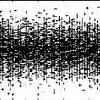
Here is the result:

can you give a comment?
Yasmin Tamimi
il 25 Set 2014
Modificato: Yasmin Tamimi
il 25 Set 2014
Youssef Khmou
il 25 Set 2014
and the result, where it represents the flip?
Yasmin Tamimi
il 26 Set 2014
Youssef Khmou
il 26 Set 2014
what about temperature? it is a factor for magnetization, try to change at least some variable that is implicitly related to it, try different values for Is, if it means the flow of electrons.
Yasmin Tamimi
il 26 Set 2014
Youssef Khmou
il 26 Set 2014
Converging M means that the magnetization is zero? what about the volume ?
Yasmin Tamimi
il 27 Set 2014
Modificato: Yasmin Tamimi
il 27 Set 2014
Categorie
Scopri di più su Quantum Computing in Centro assistenza e File Exchange
il 25 Set 2014
il 27 Set 2014
Community Treasure Hunt
Find the treasures in MATLAB Central and discover how the community can help you!
Start Hunting!
Translated by 

