Real-Time Signal Logging and Streaming
R2026bTo evaluate the behavior of signals in real-time applications, you can add instrumentation to the model, tune parameters, and display results.
Instrumentation includes signals marked for visualization by using the Simulation Data Inspector or Simulink® Scope blocks, signals connected to File Log blocks, and signals connected to graphical instruments by using instrument objects. You can instrument signals in a real-time application by using Simulink Real-Time™ Explorer or by using the MATLAB® language.
Tune scalar, vector, or matrix parameters and view signal values as numbers or as timestamped traces by using the Simulation Data Inspector. To identify parameters to tune or signals to observe, navigate the model hierarchy or create parameter and signal groups.
Design and run App Designer instrument panels containing graphical instruments. When you run an instrument panel, it interacts continuously with the real-time application and updates the associated parameters and signals.
Apps
| Simulink Real-Time | Generate real-time applications for simulations that run on a target computer and interface with I/O devices in the target computer |
| Simulink Real-Time Explorer | Interact with target computer and real-time application running on target computer |
| Simulink Real-Time TET Monitor | Observe task execution time for the real-time application running on target computer |
| Simulink Real-Time App Generator | Generate instrument panel app to interact with target computer and real-time application running on target computer (Since R2022a) |
| Simulink Real-Time Application Property Inspector | View and modify application properties (Since R2023b) |
| Simulink Real-Time Instrument Viewer | View and modify instruments in Target object (Since R2026a) |
Tools
| Simulation Data Inspector | Inspect and compare data and simulation results to validate and iterate model designs |
Functions
Blocks
 | File Log | Write signal data file log on target computer |
 | Enable File Log | Enable or disable file logging of signals on target computer |
Topics
Background
- Real-Time Signal Logging and Streaming Basics
Acquire signal data while running a real-time application and transfer the data to the development computer for analysis. - Real-Time File Logging and Streaming Workflow
Control acquisition of signal data while running a real-time application by using logging enable and recording on/off interfaces. - Import File Log Data from Speedgoat Target Computer
Import file log data from Speedgoat target computer by direct import into the Simulation Data Inspector, by import of Parquet format files with Simulink Real-Time, by manual import of Parquet format files with MATLAB or third-party tools, or by manual import into the Simulation Data Inspector. - Real-Time Signal Logging and Parameter Tuning
This example shows how to use real-time parameter tuning and data logging with Simulink® Real-Time™. - Internationalization Issues for Simulink Real-Time
Learn about Simulink Real-Time support for internationalization.
Visualize Signals
- Stream Real-Time Signals by Using Simulink Real-Time Explorer
Acquire non-time-stamped signal data and display it in text format. - Real-Time Signal Instrumentation Workflows
Instrumenting signals (adding signals to an instrument) eases workflows for visualizing signal data that real-time applications generate. - Filter Hierarchical List of Signals and Parameters in Simulink Real-Time Explorer
Find and view signals and parameters with hierarchical path information. - Post-Process Real-Time Signals Streamed to the Simulation Data Inspector
This example shows how to use a Simulink® Real-Time™ log of signal data and the Simulation Data Inspector. Signals are logged during model execution. - Add an Instrument to a Stateflow Subsystem
Use real-time application instrument to visualize Stateflow® states. - Enable Stateflow Chart Animation by Using Simulink External Mode
Display Stateflow state changes graphically in your model. - Stream Real-Time Signals by Using Simulink External Mode
Stream real-time signals by using the Simulink model as a user interface.
Use MATLAB Language
- Target and Application Objects
Use the MATLAB Command Window to change properties and control the target computer and your real-time application. - Instrumentation Apps for Real-Time Applications
Interface with your real-time application by using instrument panel apps.
Troubleshooting
Troubleshooting in Simulink Real-Time
Troubleshoot problems that you encounter while using the Simulink Real-Time product
Troubleshoot Signals Not Accessible by Name
Investigate issues for some signal types prevent file logging or streaming.
Related Information
Featured Examples
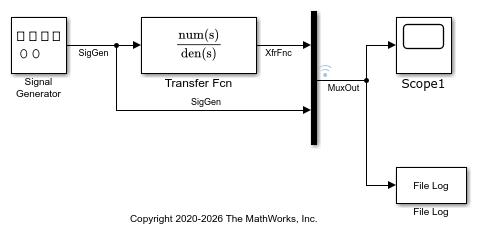
Create and Run Real-Time Application from Simulink Model
Adapt a Simulink model to run as a real-time model on a target computer. Visualize signals by adding signals to an instrument.
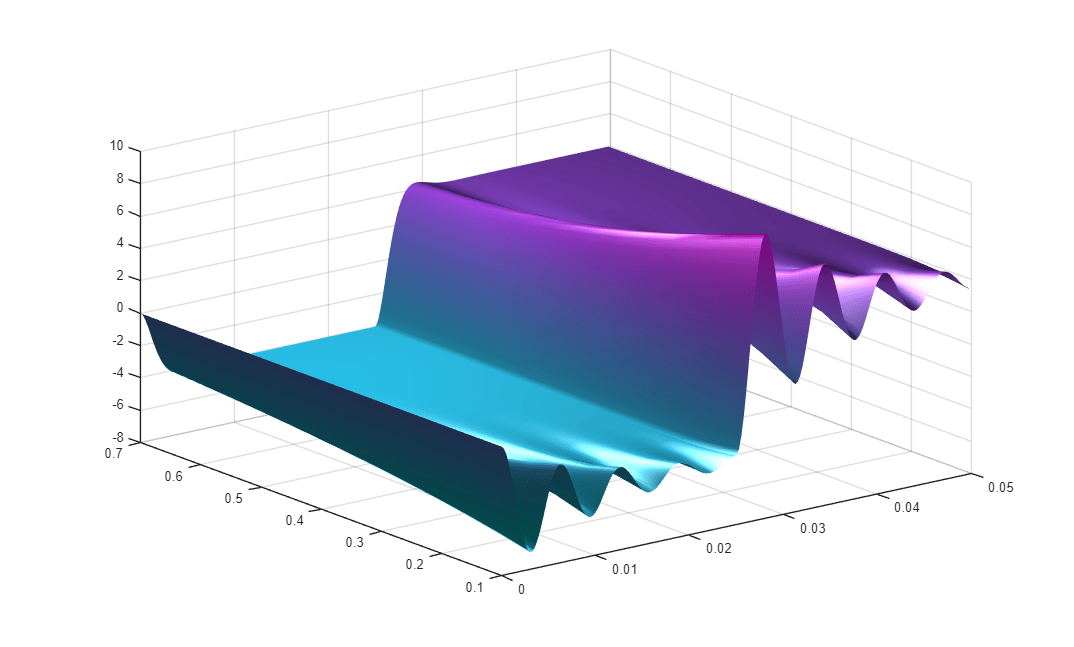
Real-Time Signal Logging and Parameter Tuning
Use real-time parameter tuning and data logging with Simulink® Real-Time™.
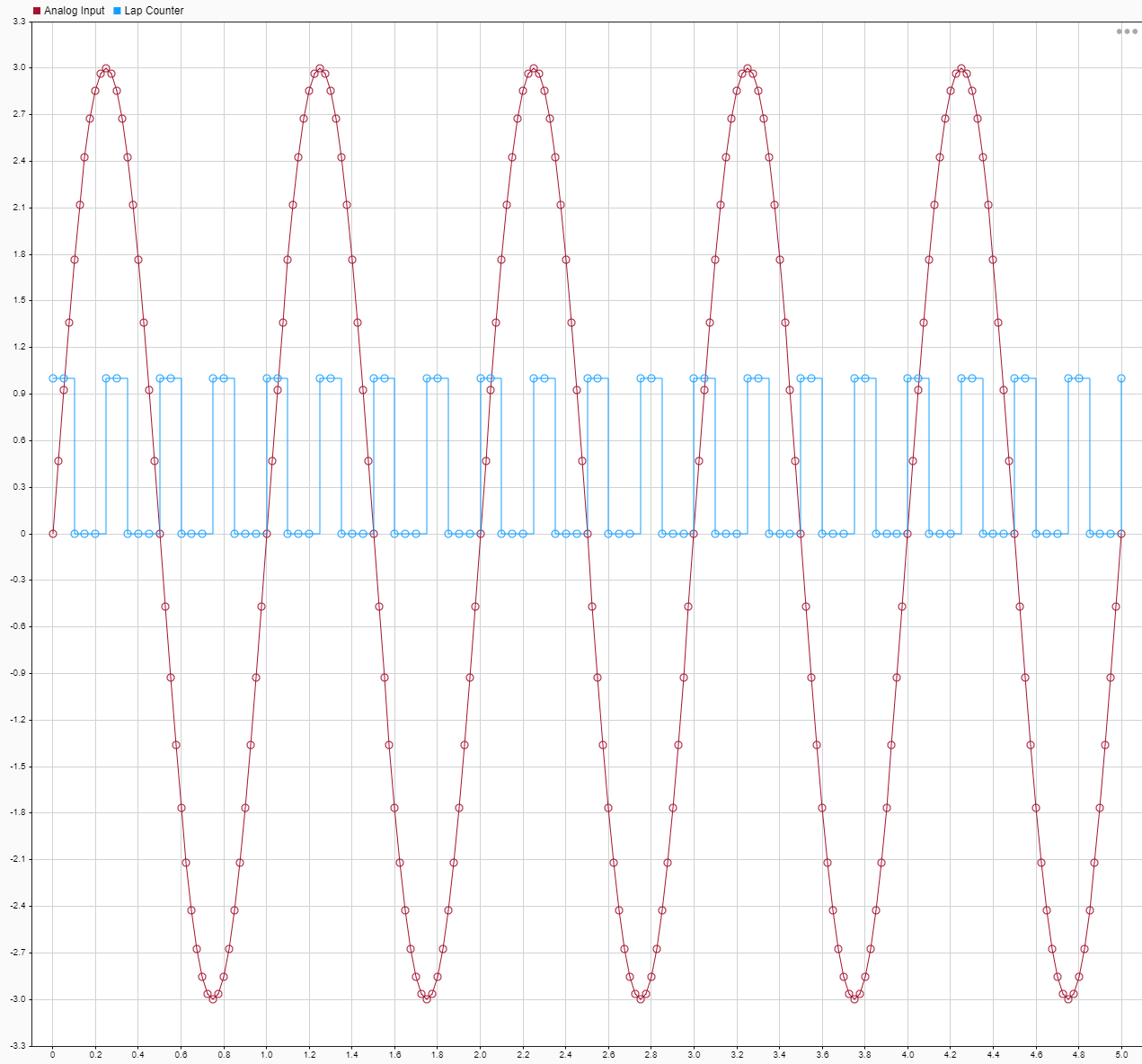
Tune Decimation for File Log Data Without Model Rebuild
Use tunable decimation for data logging.
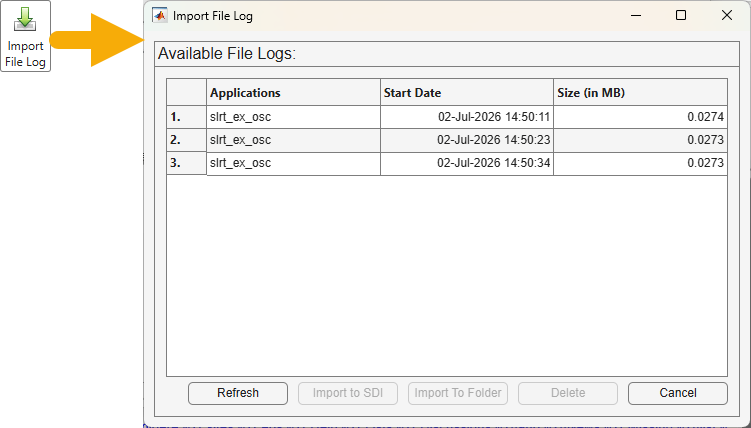
Direct File Log Import into the Simulation Data Inspector Using Simulink Real-Time
Directly import File Log data into the Simulation Data Inspector by using start function or by using Import File Log user interface.
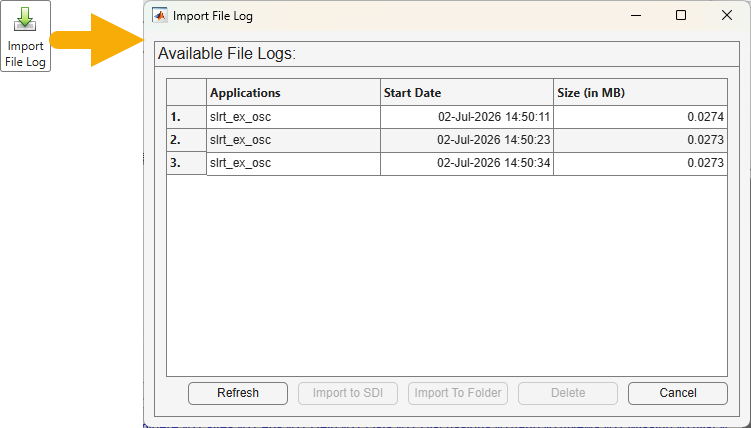
Import File Log Data as Parquet Format Files Using Simulink Real-Time
Import File Log data as Parquet format files by using the Import File Log user interface.
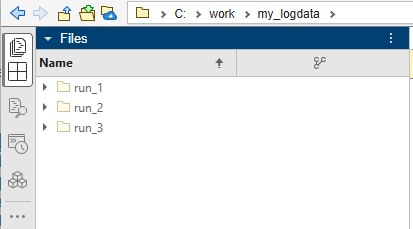
Import File Log Data as Parquet Format Files Using MATLAB or Third-Party Tools
Import File Log data as Parquet format files by using the MATLAB or third-party tools. View Parquet format data.
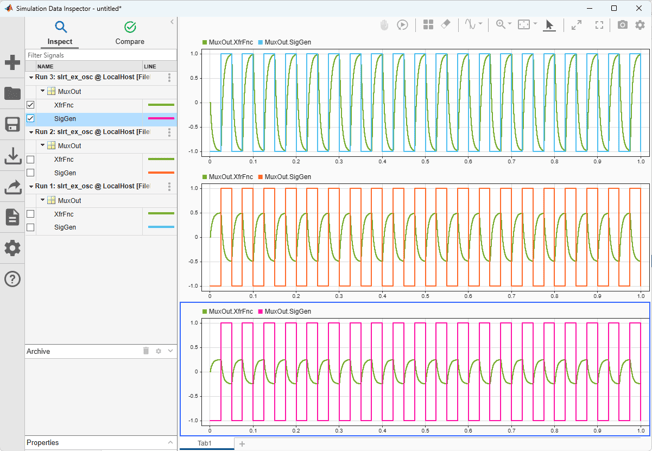
Import File Log Data Manually into the Simulation Data Inspector Using Simulink Real-Time
Import File Log data as Parquet format files by using the MATLAB or third-party tools. Import run data in the Simulation Data Inspector.

