Tabelle
R2026atable è un tipo di dati adatto per i dati orientati alle colonne o tabellari, spesso memorizzati come colonne in un file di testo o in un foglio di calcolo. Le tabelle sono costituite da righe e da variabili orientate alle colonne. Ciascuna variabile di una tabella può avere un tipo di dati diverso e una dimensione diversa, con l'unica restrizione che ogni variabile deve avere lo stesso numero di righe. Per maggiori informazioni, vedere Creazione di tabelle e assegnazione dei relativi dati o guardare Tables and Categorical Arrays (Tabelle e array categorici).
Funzioni
App
Attività di Live Editor
Argomenti
- Creazione di tabelle e assegnazione dei relativi dati
Esistono diversi modi per creare tabelle e assegnarvi dati. È possibile creare tabelle da array di input, pre-allocare tabelle e compilarle in un secondo momento oppure importare tabelle da file di testo o fogli di calcolo.
- Control How MATLAB Imports Your Data
If you want to control the import process beyond the options provided by the
readtablefunction, such as defining how to handle missing data or errors, then create an import options object before importing the data. - Access Data in Tables
Indexing into tables with parentheses, dot notation, and curly braces accesses table data in different ways. You can use indexing to create a table that is a subset of a larger table or to create an array from data in a table.
- Rename and Describe Table Variables
- Add, Delete, and Rearrange Table Variables
- Aggiunta e cancellazione di righe in una tabella
- Clean Messy and Missing Data in Tables
- Using Row Labels in Table and Timetable Operations
- Convert Text in Table Variables to Categorical
- Add Custom Properties to Tables and Timetables
- Direct Calculations on Tables and Timetables
You can perform calculations directly on tables and timetables without indexing to extract their data. All the variables in your tables and timetables must have data types that support calculations. (Da R2023a)
- Plots That Support Tables
Create plots by passing tables directly to plotting functions.
- Tables of Mixed Data
Use tables to store mixed-type data conveniently, access data with numeric or named indexing, and to store metadata.
Esempi in primo piano
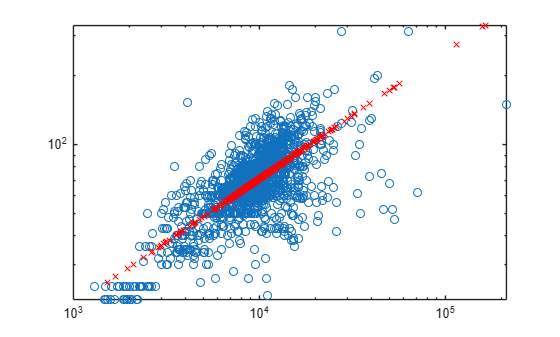
Data Cleaning and Calculations in Tables
Clean data stored in a table or timetable. Perform computations by using the numeric
and categorical data that the table contains.
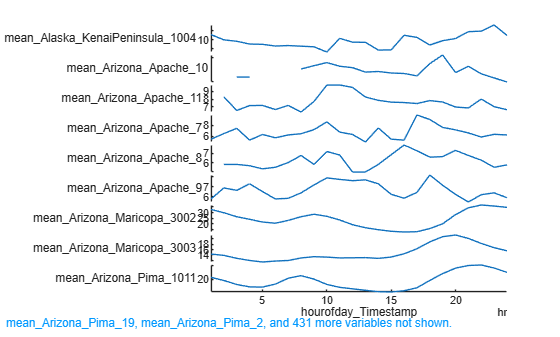
Grouped Calculations in Tables and Timetables
Perform in-place calculations on groups of data in tables and timetables.

