Addestramento personalizzato utilizzando la differenziazione automatica
R2026aSe la funzione trainingOptions non fornisce le opzioni di addestramento necessarie per l'attività o se è presente una funzione di perdita non supportata dalla funzione trainnet, è possibile definire un loop di addestramento personalizzato. Per i modelli che non possono essere specificati come reti di livelli, è possibile definire il modello come funzione. Per saperne di più, vedere Custom Training Loops.
Funzioni
Argomenti
Personalizzazione dei loop di addestramento
- Train Deep Learning Model in MATLAB
Learn how to train deep learning models in MATLAB®. - Custom Loss Functions
Learn how to define and customize loss functions for deep learning workflows. - Custom Training Loops
Learn how to define and customize deep learning training loops and models. - Custom Training Loop Model Loss Functions
Learn how to define a model loss function for a custom training loop. - Train Network Using Custom Training Loop
This example shows how to train a network that classifies handwritten digits with a custom learning rate schedule. - Train Sequence Classification Network Using Custom Training Loop
This example shows how to train a network that classifies sequences with a custom learning rate schedule. - Specify Training Options in Custom Training Loop
Learn how to specify common training options in a custom training loop. - Custom Training Loop Model Loss Functions
Learn how to define a model loss function for a custom training loop. - Update Batch Normalization Statistics in Custom Training Loop
This example shows how to update the network state in a custom training loop. - Make Predictions Using dlnetwork Object
This example shows how to make predictions using adlnetworkobject by looping over mini-batches. - Monitor Custom Training Loop Progress
Track and plot custom training loop progress. - Compare Custom Solvers Using Custom Training Loop
This example shows how to train a deep learning network with different custom solvers and compare their accuracies. - Reti con più input e più output
Scoprire come definire e addestrare reti di Deep Learning con più input o più output. - Train Network with Multiple Outputs
This example shows how to train a deep learning network with multiple outputs that predict both labels and angles of rotations of handwritten digits. - Cluster Data Using Self-Organizing Map (SOM)
This example shows how to train a self-organizing map (SOM) neural network to cluster unlabeled data. (Da R2026a) - Train Network in Parallel with Custom Training Loop
This example shows how to set up a custom training loop to train a network in parallel. - Run Custom Training Loops on a GPU and in Parallel
Speed up custom training loops by running on a GPU, in parallel using multiple GPUs, or on a cluster. - Detect Issues During Deep Neural Network Training
This example shows how to automatically detect issues while training a deep neural network. - Speed Up Deep Neural Network Training
Learn how to accelerate deep neural network training.
Differenziazione automatica
- Automatic Differentiation Background
Learn how automatic differentiation works. - Deep Learning Data Formats
Learn about deep learning data formats. - List of Functions with dlarray Support
View the list of functions that supportdlarrayobjects. - Use Automatic Differentiation In Deep Learning Toolbox
How to use automatic differentiation in deep learning.
Reti generative avversarie
- Train Generative Adversarial Network (GAN)
This example shows how to train a generative adversarial network to generate images. - Train Conditional Generative Adversarial Network (CGAN)
This example shows how to train a conditional generative adversarial network to generate images. - Train Wasserstein GAN with Gradient Penalty (WGAN-GP)
This example shows how to train a Wasserstein generative adversarial network with a gradient penalty (WGAN-GP) to generate images.
Reti neurali a grafo
- Multivariate Time Series Anomaly Detection Using Graph Neural Network
This example shows how to detect anomalies in multivariate time series data using a graph neural network (GNN). - Node Classification Using Graph Convolutional Network
This example shows how to classify nodes in a graph using a graph convolutional network (GCN). - Multilabel Graph Classification Using Graph Attention Networks
This example shows how to classify graphs that have multiple independent labels using graph attention networks (GATs).
Accelerazione della funzione di Deep Learning
- Deep Learning Function Acceleration
Accelerate model functions and model loss functions by caching and reusing traces. - Accelerate Custom Training Loop Functions
This example shows how to accelerate deep learning custom training loop and prediction functions. - Check Accelerated Deep Learning Function Outputs
This example shows how to check that the outputs of accelerated functions match the outputs of the underlying function. - Evaluate Performance of Accelerated Deep Learning Function
This example shows how to evaluate the performance gains of using an accelerated function.
Informazioni complementari
Esempi in primo piano
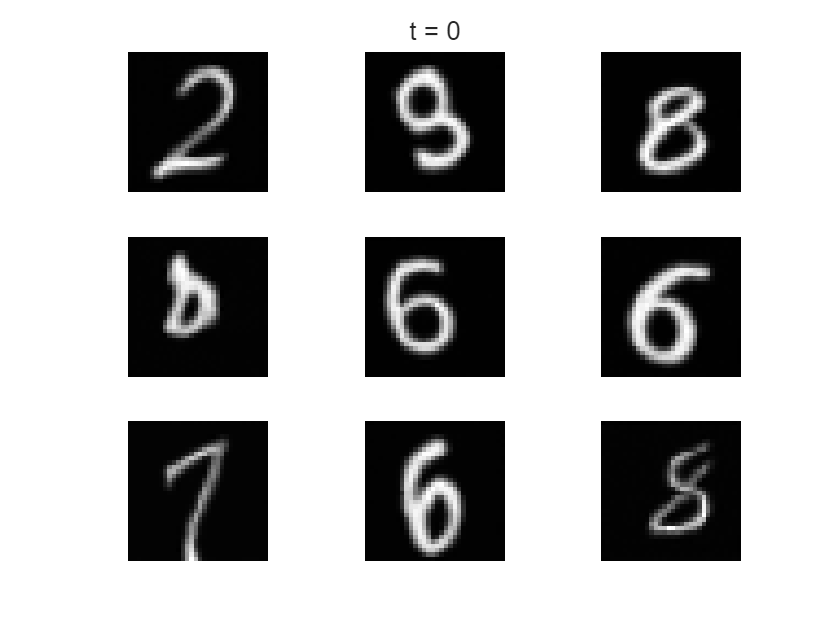
Generate Images Using Diffusion
Generate new images using a diffusion model.
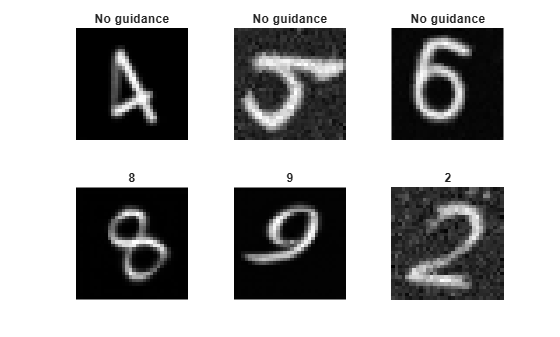
Generate Images in Specific Class Using Guided Diffusion
Generate new images using a guided diffusion model.
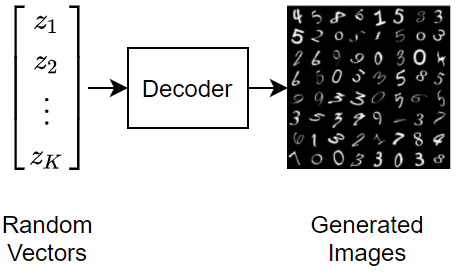
Train Variational Autoencoder (VAE) to Generate Images
Train a deep learning variational autoencoder (VAE) to generate images.
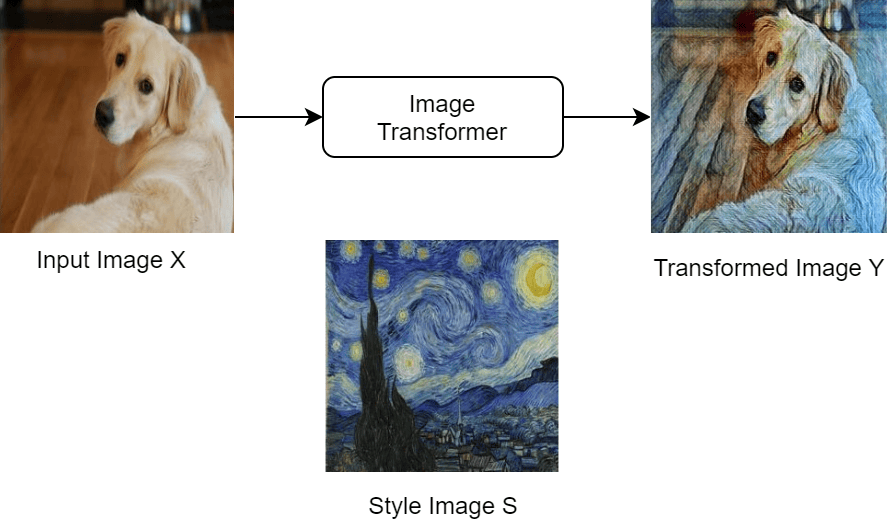
Train Fast Style Transfer Network
Train a network to transfer the style of an image to a second image. It is based on the architecture defined in [1].
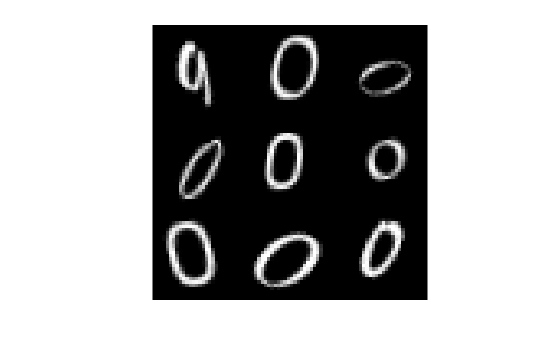
Train a Twin Network for Dimensionality Reduction
Train a twin neural network with shared weights to compare handwritten digits using dimensionality reduction.
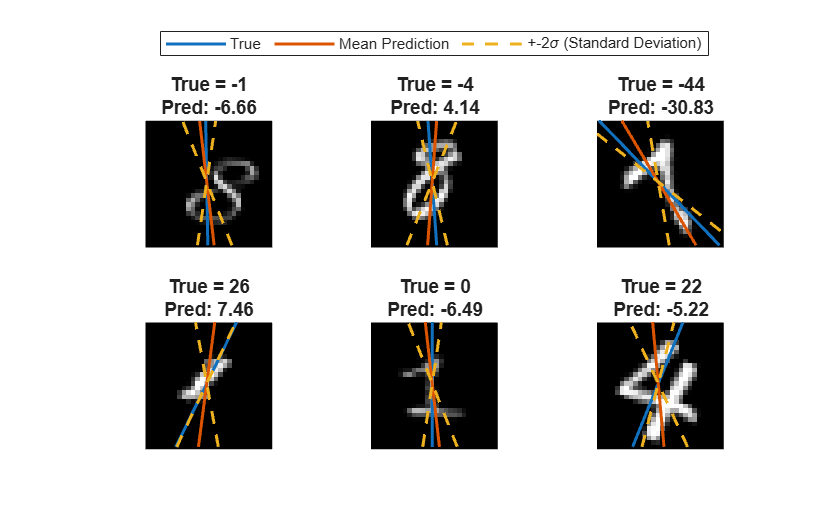
Train Bayesian Neural Network
Train a Bayesian neural network (BNN) for image regression using Bayes by Backpropagation.
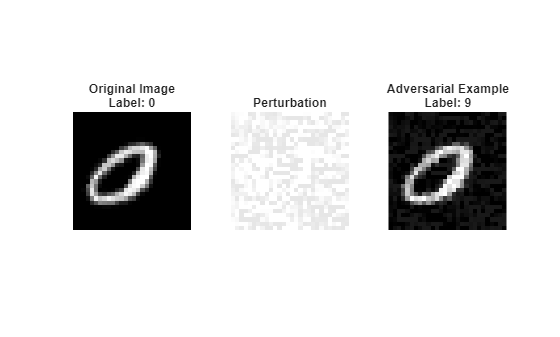
Train Image Classification Network Robust to Adversarial Examples
Train a neural network that is robust to adversarial examples using fast gradient sign method (FGSM) adversarial training.
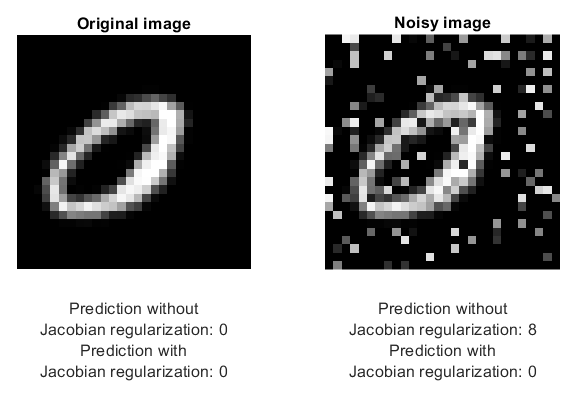
Train Robust Deep Learning Network with Jacobian Regularization
Train a neural network that is robust to adversarial examples using a Jacobian regularization scheme.
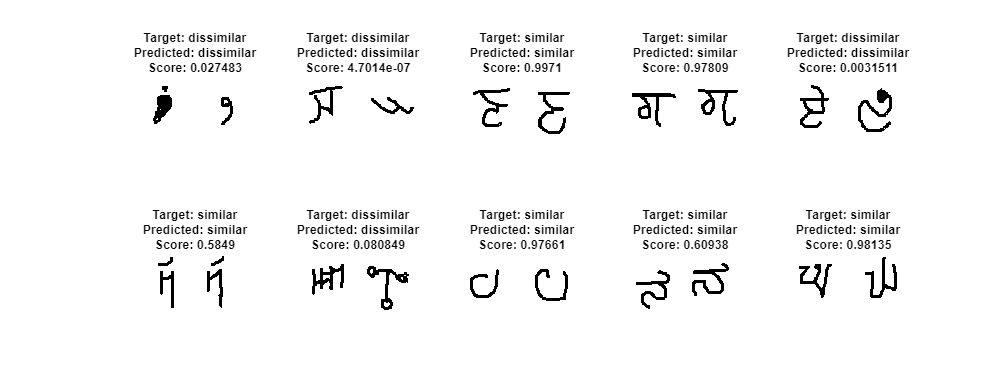
Train a Twin Neural Network to Compare Images
Train a twin neural network with shared weights to identify similar images of handwritten characters.
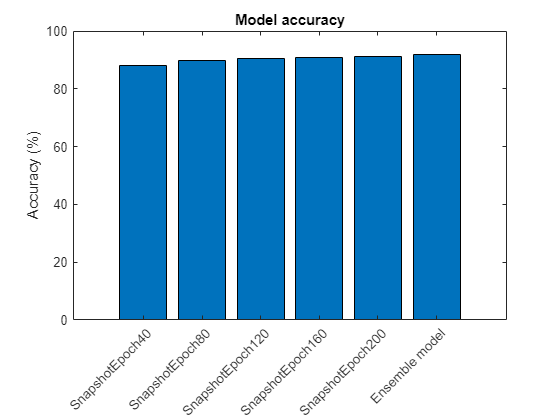
Train Network Using Cyclical Learning Rate for Snapshot Ensembling
Train a network to classify images of objects using a cyclical learning rate schedule and snapshot ensembling for better test accuracy. In the example, you learn how to use a cosine function for the learning rate schedule, take snapshots of the network during training to create a model ensemble, and add L2-norm regularization (weight decay) to the training loss.
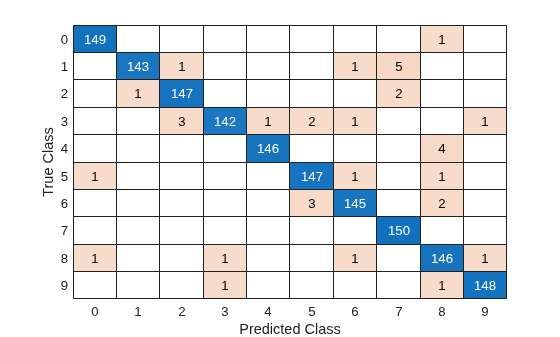
Train Network Using Federated Learning
Train a network in a distributed, decentralized way using federated learning.
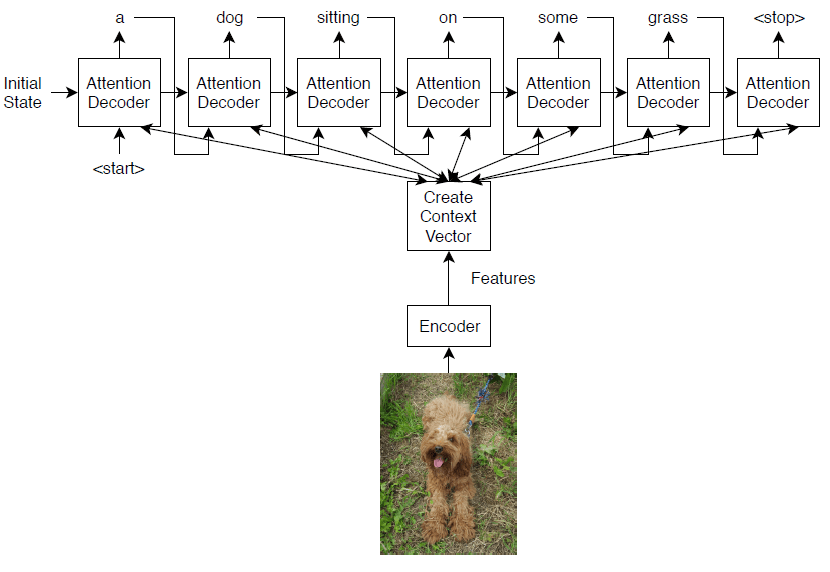
Image Captioning Using Attention
Train a deep learning model for image captioning using attention.

